
Overcoming Teacher Resistance and Adoption Hurdles in Turnkey STEM Implementation
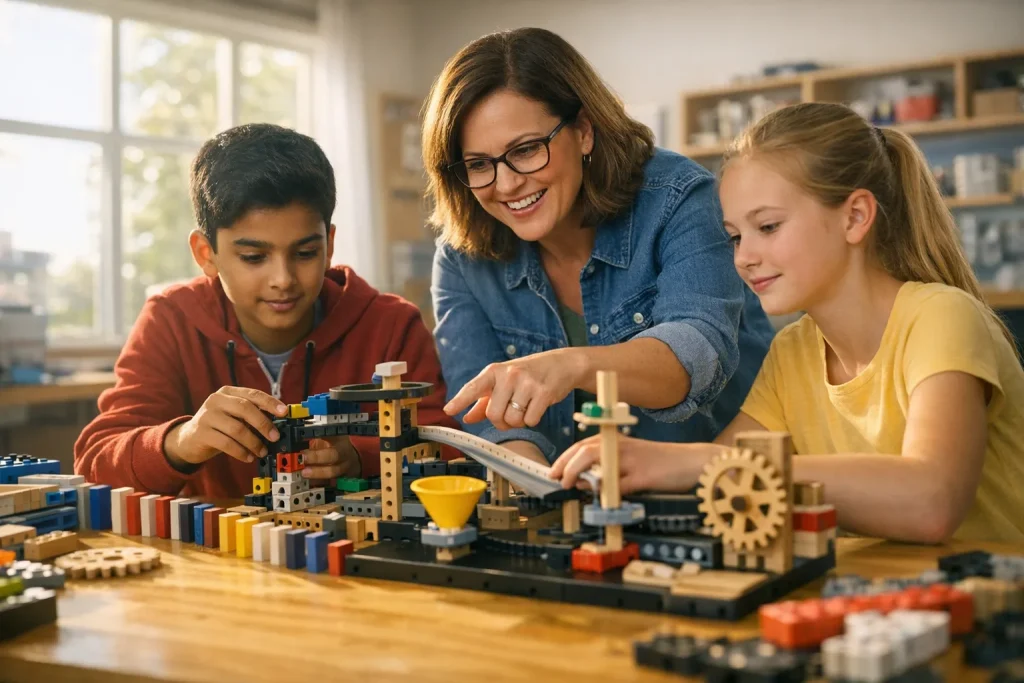
Few things in education are more energizing than watching a classroom come alive during a great hands-on STEM or project-based learning (PBL) lesson. Every school leader wants to create more of those moments where students collaborate, tackle real-world challenges, and build lasting graduate competencies. The secret to scaling that excitement across an entire district lies in how we support the educators leading the room. When teachers are expected to invent interdisciplinary units completely from scratch, the sheer volume of prep work can overshadow the joy of teaching. On the other hand, overly rigid, scripted programs leave little room for the personal creativity that makes great teachers shine. The sweet spot is giving educators a strong foundation they can make their own.
Recent research highlights just how transformative the right support system can be. An October 2026 RTI International study in the Journal of Science Teacher Education found that while teacher confidence in STEM instruction can plateau during a busy first-year rollout, it flourishes when districts pair clear curriculum alignment with meaningful professional development and leadership that protects teacher time. By equipping our staff with structured, scaffolded turnkey systems, we free them from the heavy lifting of curriculum design so they can pour their energy into guiding students.
How to Shift Teachers From Designing PBL From Scratch to Facilitating Turnkey Units
Empowering teachers to thrive as PBL facilitators starts with separating behind-the-scenes curriculum architecture from daily classroom instruction. A scaffolded turnkey framework takes care of the standards mapping, backward design, rubric creation, and student handouts while giving teachers full ownership over pacing, student grouping, and classroom culture. That support is a massive gift of time. According to the National Association of State Boards of Education (NASBE), teachers spend an average of 12 hours every week searching for and building their own instructional materials.
Imagine giving those 12 hours back to your faculty every single week. When we free teachers from acting as full-time curriculum writers, they can step fully into the role they love: instructional coaches. Organizations like PBLWorks champion this exact approach by offering dedicated training tracks for “facilitating” projects separately from “designing” them. It is a refreshing reminder for any school team that true professional autonomy is not about formatting worksheets on a Sunday night. Real instructional freedom happens in the classroom when a teacher sparks student curiosity, coaches a team through a design challenge, and personalizes learning in the moment.
Mirror-image facilitation guides make this transition seamless and rewarding. When a Teacher’s Guide aligns with the Student Workbook page for page, complete with helpful discussion checkpoints and sample student outcomes, educators can step into Monday morning feeling fully prepared to lead rich engineering lessons from day one.
Replacing Inconsistent Teacher Created Project Based Learning
Building a cohesive, district-wide PBL culture means bringing classrooms together around a shared, grade-sequenced curriculum and a unified skills matrix. When teachers are supported with a common framework rather than left to piece together activities from internet marketplaces, projects transform from occasional “dessert projects” (fun standalone crafts at the end of a unit) into vibrant, sustained inquiry where students master core content through hands-on discovery.
As David Steiner notes in NASBE’s report, relying on improvised materials can leave academic rigor and grade-level sequencing up to “luck and chance.” A shared framework turns that variation into an inspiring opportunity for equity. Every student in your district deserves the thrill of tackling high-level, NGSS-aligned engineering challenges, and a unified curriculum ensures that every classroom has the tools to deliver that high standard.
Teachers Spending Too Much Time Designing PBL Units: How to Fix It
Giving teachers back their planning periods is as simple as providing ready-to-use units equipped with pre-built lesson plans and thoughtful assessment rubrics. Designing fair, meaningful assessments for open-ended projects is one of the toughest parts of STEM instruction. In fact, a May 2024 study in the Journal of Research in Science, Mathematics and Technology Education found that creating formative and summative assessments is the area where STEM teachers want the most support. Providing ready-made rubrics gives teacher confidence an immediate boost.
This is where an out-of-the-box solution like iBlocks (by Teq) brings immediate relief and excitement to a school building. Created by certified educators who understand the rhythm of a real classroom, each Essential iBlock package includes a complete 6-part turnkey structure: a Skills Matrix, a standards-mapped Framework, a Student Workbook, a mirrored Teacher’s Guide, 30 to 45 minute Lesson Plans, and 4-tier Student Self-Assessments (Emerging, Progressing, Proficient, Exceeding). Instead of high-stakes tests and stacks of weekend grading, students take pride in demonstrating mastery through self-evaluation, peer discussion, and creative project iterations. Teachers get to spend their energy celebrating growth right alongside their students.
How Can School Districts Support Teachers Implementing Project-Based Learning?
Great district support pairs classroom-ready materials with collaborative onboarding, live instructional coaching, and bite-sized professional learning. As a July 2025 longitudinal study by the RAND Corporation highlights, great instructional materials really shine when they are paired with curriculum-specific professional learning and encouraging feedback. When leaders invest in both the tools and the people, new instructional practices flourish.
Five supportive pillars help teachers feel confident and energized from the very first module:
-
Ready-to-Use Curriculum: Equip teachers with units already aligned to NGSS, ELA, and Math standards so hands-on learning seamlessly enriches core instruction.
-
Collaborative Onboarding: Dedicate time before launch for teachers to explore the modules together, share ideas, and build shared momentum.
-
Just-in-Time Micro-Learning: Pair each unit with short, practical professional development. For example, teachers using iBlocks can jump onto OTIS for educators for quick, confidence-building courses on tools like 3D printers or coding robots right before they introduce them to students.
-
Real-Time Instructional Coaching: Give teachers direct access to friendly, live instructional specialists during the school day whenever they want a quick tip or troubleshooting partner.
-
A Growth-Focused Assessment Culture: Celebrate formative checkpoints and student reflection so classrooms become welcoming spaces for creative iteration and discovery.
Smooth day-to-day classroom workflows also make facilitation a breeze. Digital companions like iBlocks Online (included at no extra cost) sync effortlessly with Google Classroom to keep hands-on projects organized. Teachers can guide class pacing by unlocking modules as students are ready, celebrate multimodal student sketches and uploads in one dashboard, and see instant notifications whenever a student wants a quick check-in.
How to Overcome Teacher Pushback on District PBL Adoption
Building genuine teacher buy-in for a new PBL initiative starts with honoring educators’ expertise, protecting their instructional time, and giving them flexible entry points for new technology. When teachers ask questions during a rollout, it almost always comes from a place of caring deeply about their students and their standards. As a December 2024 Edutopia article notes, structured curriculum and authentic project-based learning work wonderfully together. A clear pacing guide actually gives teachers more freedom by showing them exactly where they have room for deep, student-led exploration.
School leaders can turn early hesitation into enthusiasm with three supportive strategies:
-
Highlight Clear Standards Alignment: Share the standards cross-walks right from the start. When teachers see how an engineering challenge directly reinforces core NGSS physics concepts alongside informational writing standards, they can dive into the project knowing their required content is covered.
-
Offer Flexible Tech Entry Points: Invite teachers to start with familiar, low-tech or no-tech materials. Take a project where students engineer a Rube Goldberg machine. A teacher can joyfully launch that unit tomorrow using everyday classroom supplies like cardboard, dominos, marbles, and string. As their comfort grows, they can easily expand that same Rube Goldberg design in later modules by bringing in CAD software, 3D-printed levers, or programmable robots using the exact same lesson framework.
-
Celebrate Their Classroom Voice: Reassure your staff that a turnkey framework simply provides the helpful guardrails, such as driving questions, graphic organizers, and rubrics. The teacher still brings the magic through their classroom relationships, group dynamics, and creative guidance.
When educators have flexible, well-organized roadmaps like the Rube Goldberg Machines PBL iBlock, they can jump into ambitious engineering challenges knowing they are supported every step of the way.
Do Turnkey STEM Programs Really Get Adopted by Classroom Teachers?
Yes, classroom teachers enthusiastically adopt turnkey STEM programs when those programs are built as flexible, teacher-guided frameworks and backed by ongoing coaching. Teachers already believe in the power of hands-on learning; they just need the time and tools to make it happen regularly. A January 2025 study in The Electronic Journal for Research in Science & Mathematics Education noted that while 68% of STEM teachers struggled to find time for frequent PBL when building units alone, removing those planning barriers unlocks consistent classroom use.
Adoption thrives when a program is built around what teachers actually need. Because iBlocks are a one-time purchase with unrestricted use and no expiring subscriptions, educators never have to worry about annual license renewals cutting a great project short. They can pace the 30 to 45 minute lessons to fit their school calendar naturally. When districts invest in low-prep, student-led pathways crafted by experienced educators, teachers get their evenings back and gain more time for the best part of the job: watching students light up as they bring their own ideas to life.
Ready to Empower Your Teachers With Turnkey PBL?
Give your educators the joy of hands-on STEM facilitation without the heavy lifting of writing curriculum from scratch. Explore how iBlocks can help your district bring engaging, standards-aligned project-based learning to every classroom, or schedule a quick conversation with the Teq team to see a sample Student Workbook and Teacher’s Guide in action.