
Building Early STEM Foundations: How Mia & Codie Prepares Pre-K–2 Learners for Project-Based Learning
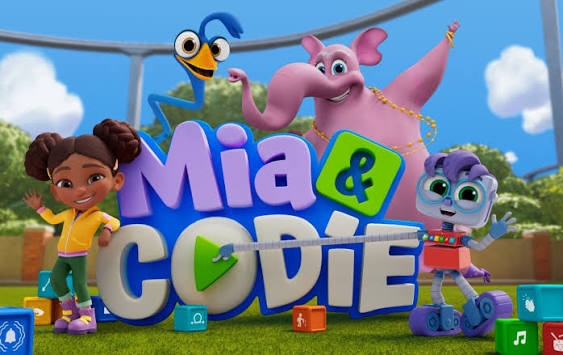
Moving young learners from free play into structured STEM isn’t always simple. When districts roll out project-based learning (PBL) across K–12, early childhood teachers hit a common obstacle: how do you introduce computational thinking, basic algorithms, and the Engineering Design Process (EDP) to kids who can’t read yet, without parking them in front of screens all day?
Tactile, story-based tools like Mia & Codie give schools a practical way forward. Physical manipulatives turn abstract logic into something tangible, helping Pre-K–2 students build the problem-solving habits they need before stepping into formal elementary STEM pathways.
The Early STEM Imperative: Cognitive Foundations
Computational thinking in early grades comes down to four basic habits: breaking down problems, spotting patterns, ordering steps, and testing fixes. Developmental research shows that teaching these ideas through physical objects directly sharpens spatial reasoning, early math skills, and emerging literacy.
In their work on the Coding as Another Language (CAL) framework, Bers et al. (2023) found that early coding mirrors how children learn to speak and read. Arranging physical, symbolic blocks in sequence reinforces syntax and order. Likewise, research in the Early Childhood Education Journal shows that young children grasp computational concepts much faster when lessons connect to familiar stories and classroom routines rather than abstract digital interfaces.
Student engagement data backs this up. A recent report from Gallup (2024) found that 54% of K–12 students feel disconnected from typical classroom activities, while 46% note that hands-on projects make school significantly more interesting.
Bridging Tactile Coding to a PBL Curriculum with Mia & Codie
Mia & Codie is a screen-free, icon-based coding tool designed for learners ages 3–7. Recognized with a Common Sense Media Family Selection seal, its design focuses on four practical classroom elements:
-
Physical Block Dock & Codie Blocks: Kids snap modular action blocks into a Bluetooth dock to build command sequences. Feeling the physical order of steps helps pre-readers understand that machines follow instructions literally.
-
Hands-On Debugging: When a program doesn’t run as expected, kids don’t get a cryptic error code. They look right at the dock, find the misplaced block, and swap it out, teaching them that mistakes are just part of the design process.
-
Story-Based Lessons: Built around 20 PBS Member Station episodes and 40 classroom challenges featuring Mia and her robot brother Codie, the activities weave social-emotional skills into computer science problems.
-
Accessible to Non-Readers: Symbol- and color-based blocks mean multilingual learners, special education students, and emerging readers can tackle core computer science concepts without text getting in the way.
Low Tech Project-Based Learning Ideas for Elementary Schools
Low-tech project-based learning ideas for elementary schools give teachers a way to run deep engineering and science units without needing high-speed Wi-Fi or 1:1 devices. Once students build basic problem-solving habits in Pre-K and kindergarten with tools like Mia & Codie, they can jump straight into collaborative, hands-on design challenges.
Here are three proven low-tech PBL project models for elementary grades:
-
Engineering for Hazardous Weather (Grades K–2): Students investigate severe local weather conditions, then use cardboard, tape, and recycled containers to prototype waterproof emergency supply carriers and test drop mechanisms.
-
Jurassic Habitat Design (Grades K–2): Students examine prehistoric environments and adapt physical dioramas, using clay, foliage, and craft materials, to meet specific dinosaur survival needs.
-
Rube Goldberg Chain Reactions (Grades 3–5): Using everyday classroom supplies like cardboard tubes, dominoes, marbles, and string, students build multi-step mechanical systems to demonstrate energy transfer and simple physics.
Turnkey Coding and Robotics Project-Based Learning Curriculum for Grades 3-8
A turnkey coding and robotics project-based learning curriculum for grades 3–8 gives upper elementary and middle school teachers complete, standards-aligned units without requiring a computer science degree or dozens of prep hours.
As students grow out of early tactile tools, projects need to become more interdisciplinary. Strong intermediate curricula might blend creative writing with robotics (like programming robots to act out student-written plays) or connect math with mechanical design (like building robots for obstacle courses). Platforms like iBlocks Online keep these projects manageable by offering digital student workbooks, built-in sketching tools, and teacher grading dashboards.
Top Turnkey STEM and STEAM Curriculum Platforms for Elementary School Districts
The best turnkey STEM and STEAM curriculum platforms for elementary school districts offer ready-to-teach, standards-aligned units with minimal teacher prep, interdisciplinary connections, and simple purchasing models.
iBlocks by Teq is built specifically to remove the friction from project-based learning. Each iBlock follows a 10-module structure across five clear stages: Research & Planning, Design & Construction, Testing & Learning, Share & Showcase, and Extensions. Every unit leads directly to a tangible capstone build.
In addition to the option of an ongoing annual software license for the iBlocks library for a grade band, iBlocks uses a one-time purchase model that gives districts perpetual ownership to a single iBlock. That structure allows schools to fund modules through federal and state grants like Title I Part A, Title IV Part A/B (21st CCLC), ARP ESSER, and Perkins*. Teachers also get direct implementation coaching through OTIS for educators.
Elementary and Middle School STEM Curriculum Aligned with CSTA Computer Science Standards
A standards-aligned STEM curriculum should guide students along the Computer Science Teachers Association (CSTA) continuum, moving smoothly from physical sequencing to modular programming and data analysis.
-
CSTA Level 1A (Pre-K–2): Covers basic algorithms, loops, and troubleshooting using physical objects. Tools like Mia & Codie and primary iBlocks units meet this standard through symbolic tiles and screen-free robotics.
-
CSTA Level 1B (Grades 3–5): Focuses on modifying existing code, creating conditional branches, and testing variables. Students transition into block-based environments like Scratch or Blockly to build interactive programs.
-
CSTA Level 2 (Grades 6–8): Focuses on systems thinking and hardware integration. Middle schoolers create sensor-driven devices with microcontrollers (like micro:bit), design multi-screen apps, and analyze data sets to address community issues.
How to Vertically Articulate STEM and PBL Curriculum from Elementary Through Middle School
Vertical articulation means ensuring skills build logically from one grade to the next. When curriculum teams align the Engineering Design Process (EDP) and computational thinking across grade bands, students never have to relearn core inquiry routines.
Here is how a district can scaffold STEM and PBL progression across K–12:
-
Pre-K–2 (Hands-On Foundations): Focus on tactile exploration, storytelling, and screen-free robotics (like Mia & Codie). Students practice following step-by-step instructions, fixing physical build errors, and recording observations.
-
Grades 3–5 (Applied Mechanics & Block Coding): Move into visual programming, simple machines, and introductory 3D modeling. Students learn to test isolated variables and document their build iterations in digital workbooks.
-
Grades 6–8 (Physical Computing & Prototyping): Introduce microcontrollers, sensor-driven automation, 3D printing, and spreadsheet data analysis to solve community-based engineering problems.
-
Grades 9–12 (Career & Technical Specialization): Advance into industry-standard CAD, text-based languages like Python, prosthetic design, and autonomous robotics linked to regional workforce pathways.
Starting with intuitive, screen-free tools in the earliest grades gives students the confidence and problem-solving mindset they need to tackle complex engineering challenges all the way through high school.
Bring Hands-On STEM and PBL to Your District
Ready to build an engaging STEM learning continuum from early childhood through high school? Explore how Mia & Codie introduces screen-free coding in Pre-K–2, or connect with the educational team at Teq to design a customized, standards-aligned PBL pathway for your classrooms.
*Districts should double-check their specific federal, state, and local grant guidelines with their program administrators prior to purchasing.