Using iBlocks in Bridging Next-Gen Standards and the Portrait of a Graduate

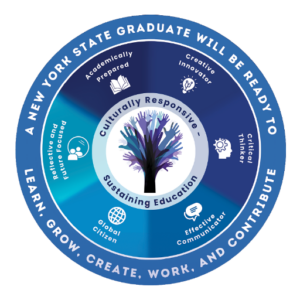
If you’ve been keeping up with the latest from Albany, you know our “to-do” lists just got a lot longer. We’re all trying to wrap our heads around two big frameworks: the Next Generation Learning Standards (NGLS)—the “what” of our daily lessons—and the Portrait of a Graduate (PoaG, or PoG)—the “who” we want our students to be when they walk across that stage. That’s why we created this guide on using iBlocks to bridge Next-Gen Standards and the Portrait of a Graduate.
A Movement with Deep Roots: From States to a National Theme
It’s helpful to remember that we aren’t alone in this. The “Portrait of a Graduate” concept didn’t just appear out of thin air; it has a rich history rooted in the individual efforts of states across the country. Over the last decade, districts from Virginia to California began realizing that a high school diploma needed to represent more than just “seat time” or a passing test score. Over 20 states have adopted frameworks to define student success beyond traditional academics. What started as a local grassroots conversation about “21st-century skills” has evolved into a powerful, common national theme. Across the U.S., there is a shared recognition that the world our students are entering is fundamentally different from the one we grew up in. By adopting its own PoaG, New York is joining a massive collective effort to redefine success. We are moving toward a common goal: ensuring every student, regardless of their zip code, graduates with durable skills—like empathy, critical thinking, and adaptability—that the modern world demands. Yet, as teachers and administrators, it often feels like we’re being asked to do two different jobs at once. How are we supposed to hit every academic benchmark while also making sure our kids are becoming empathetic Global Citizens and Creative Innovators? At Teq, we don’t see these as separate initiatives. Honestly, they’re just two sides of the same coin.Why Content Needs Context (And Why We’re All Tired)
We’ve all seen “initiative fatigue” in our buildings. The Next-Gen Standards give us the rigor, but without context, it can feel like we’re just teaching to a test. On the flip side, the Portrait of a Graduate is a beautiful vision, but without a plan, those six attributes usually stay stuck on a hallway poster. Project-Based Learning (PBL) is the “how” that brings them together. When we give students a real-world problem to solve, they start using those Next Gen Standards as tools—not just facts to memorize—to reach those Portrait of a Graduate goals. It’s about making the learning stick.iBlocks: The Teacher-Friendly Solution
We built iBlocks because we know that high-quality PBL is incredibly hard to design from scratch while you’re also grading, planning, and managing a classroom. An iBlock isn’t “one more thing” on your plate; it’s a pre-designed, flexible pathway that does the heavy lifting of alignment for you.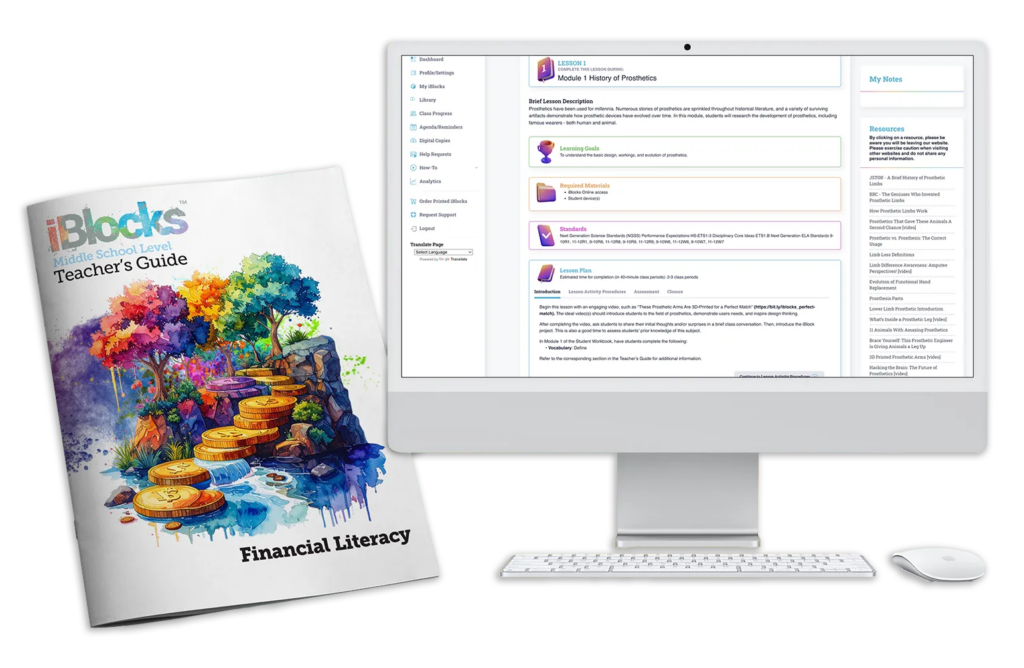
Here’s how we’re helping you bridge that gap:
1. Rigor You Can Trust (NGLS + Academically Prepared)
Every iBlock starts with a Skills Matrix. We know you need to justify every minute of instructional time, so we’ve mapped every module directly to specific NYS Next Gen Standards. Whether your high schoolers are navigating Financial Literacy or your K-2 kids are researching a Class Pet, they’re hitting the standards by doing the work.2. Space for “The Messy Middle” (Creative Innovator + Critical Thinker)
The Portrait of a Graduate asks for innovators, and we know that innovation requires a little bit of failure. Through our Design Challenge Flow—like in the Rube Goldberg or prosthetic hand projects—students research, build, fail, and try again. They aren’t just reading about the engineering design process; they’re living it.3. Real Skills for Real Audiences (Effective Communicator)
Communication is more than just a presentation; it’s about craft. In the Design a Comic Book iBlock, students explore advanced literacy and narrative techniques. Every iBlock wraps up with a Capstone Presentation, giving students the chance to pitch their ideas and justify their choices to a real audience. It’s exactly the kind of “soft skill” mastery the state is looking for.4. Empathy in Action (Global Citizen)
Being a Global Citizen is a big ask for a teenager. In the Prosthetics iBlock, we take it from abstract to actual. Students explore how technology and ethical design can change lives. They see firsthand that their “school skills” (Next Gen) can solve “world problems” (PoaG).5. Building Resilience (Reflective and Future-Focused)
Social-Emotional Learning (SEL) is often the hardest part of the Portrait to prove. We’ve built Self-Assessments and Rubrics right into the student workbooks. Students stop and reflect on how they worked with their team and how they bounced back from a setback. It turns that internal growth into something you can actually see and measure.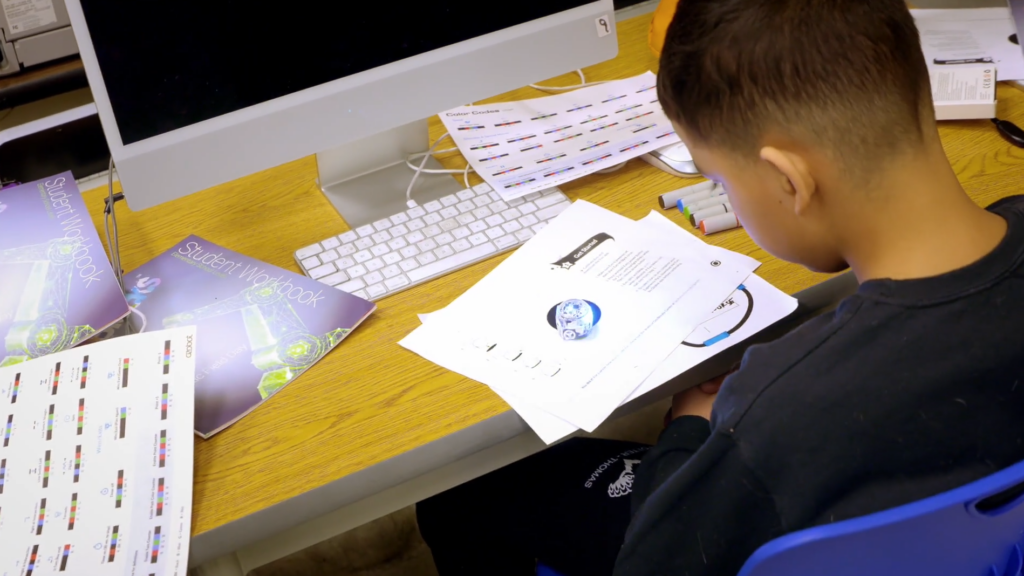
What Success Looks Like: iBlocks in Action
When we talk about the Portrait of a Graduate, we’re talking about tangible student outcomes. Here is what achieving those PoaG attributes looks like when a student completes an iBlock:- The K-2 “Advocate”: In the Class Pet iBlock, a student doesn’t just choose an animal; they become an Effective Communicator. Success looks like a first grader standing in front of their peers, using a coded robot to demonstrate how to care for a living creature, and using evidence to “pitch” their choice to the class.
- The Middle School “Storyteller”: In the Design a Comic Book iBlock, success is a student who has moved beyond basic reading to become a Critical Thinker. In this iBlock students analyze how visual palette and pacing influence emotion, culminating in a 10-page original narrative that shows—not just tells—their perspective on a community issue.
- The High School “Engineer”: In the Prosthetics iBlock, success is a senior who has failed four times to get a tension cable to work but doesn’t give up. They are a Creative Innovator and a Reflective Learner. Students can explain the physics of the grip (NGLS) and the ethical importance of low-cost medical design (PoaG) in the same breath.
Let’s Build the Graduate Together
The goal for all of us is to send kids out into the world who are ready for whatever comes next. With iBlocks, you aren’t just “checking boxes” for the state. You’re creating a classroom where the Next Gen Standards and the Portrait of a Graduate are working together in every single lesson.Move Beyond Basic Standards and Start Building the Graduate
We’d love to hear about the vision you have for your students. Let’s start a conversation and see how iBlocks can help you make it happen. The four titles mentioned in this article are available as samples for reviewing iBlocks.For more tips, tricks, and tools for teaching in and out of the classroom, check out more content on the Teq Talk blog or our YouTube channels OTIS for educators and Tequipment. We also offer virtual professional development, training, and support with OTIS for educators. Explore the technology and strategies that spark student success — no matter where teaching or learning are happening! Follow us on social:
 edteq
edteq  OTIS4educators | Teq Products | iBlocks
  MyTeq
MyTeq  Teq
Teq